Stock backtesting: Understanding the Stockpicker engine

If you want to test a trading idea not just on a single stock but on a whole group of stocks, you quickly notice that this kind of backtest behaves differently from testing a single stock. In StrategyQuant X, the so-called Stockpicker engine handles this job, a test environment that runs a strategy across many stocks at the same time. That brings two characteristics you should know before you test a stock strategy yourself: more computing effort and a different data basis than when testing a single symbol. This article shows you why that is and what it means for your expectations of such a backtest.
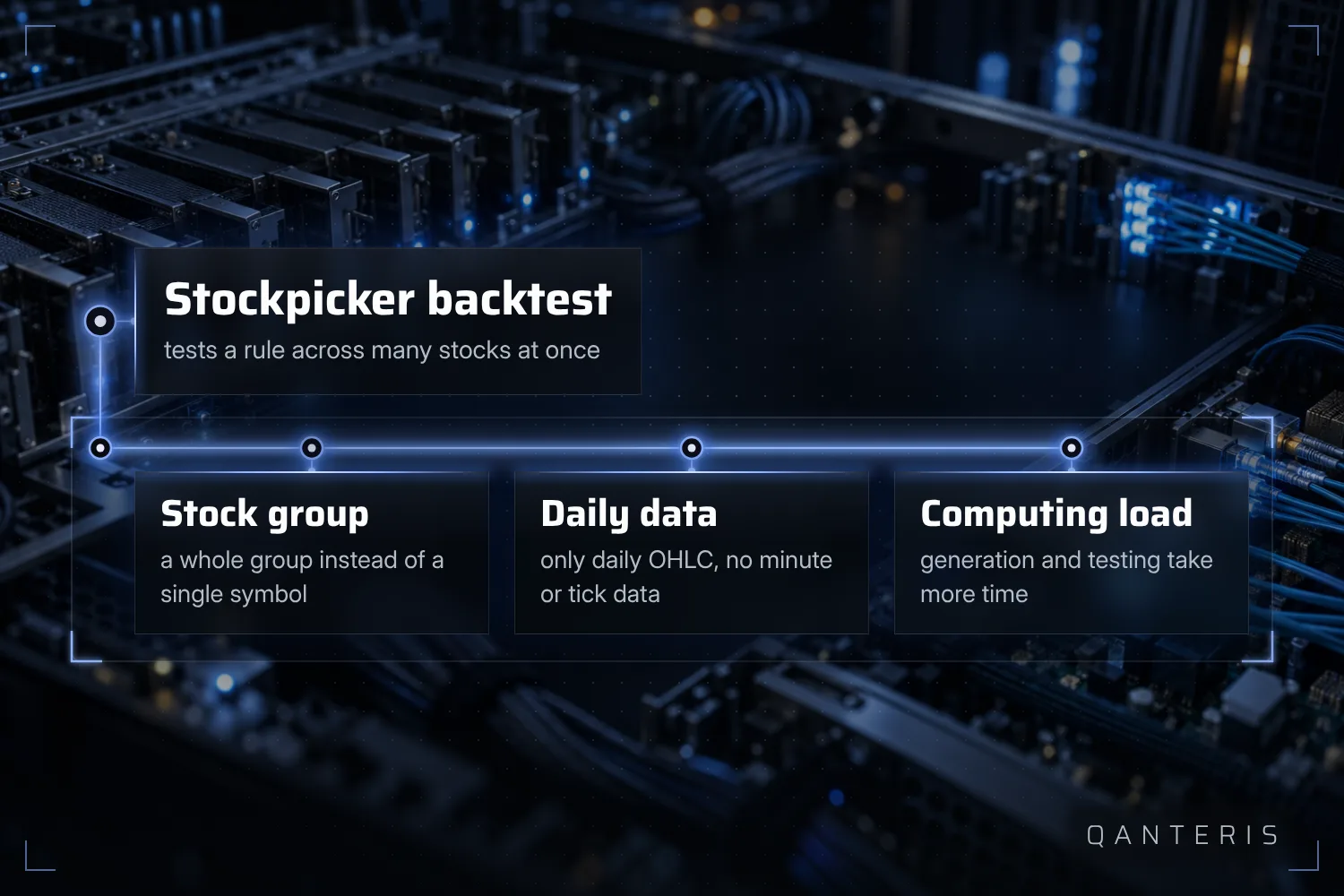
When one symbol becomes hundreds
A backtest for a single stock checks a strategy against the price series of exactly one symbol. If you test the same strategy with the Stockpicker engine instead, it runs at the same time across all stocks in the chosen group, often hundreds at once. In practice this means: generation and backtesting take noticeably more time for a Stockpicker strategy than for a strategy on a single symbol.
The vendor also pointed out that, at the time the underlying source was written, the Stockpicker engine was still under active development. So the properties described applied to that development stage, not as a final statement about every future version.
So when you move from a strategy for a single symbol to a strategy for a whole group of stocks, you can plan for correspondingly more time for generation and testing. That isn't just a question of the software, it's a consequence of the fact that every rule is now checked against many price series instead of just one.
Daily prices only: the data basis of the Stockpicker engine
Besides the higher computing effort, the Stockpicker engine has a second characteristic: it works exclusively with daily OHLC prices, meaning the open, high, low and close of a day. You can't use minute or tick data in this mode.
The reason is the sheer number of symbols: the engine has to evaluate hundreds or thousands of stocks in a reasonable amount of time, and that's practically impossible with finer time resolutions. This limitation applies specifically to the Stockpicker engine, not to a backtest on a single symbol, where finer data is generally possible.
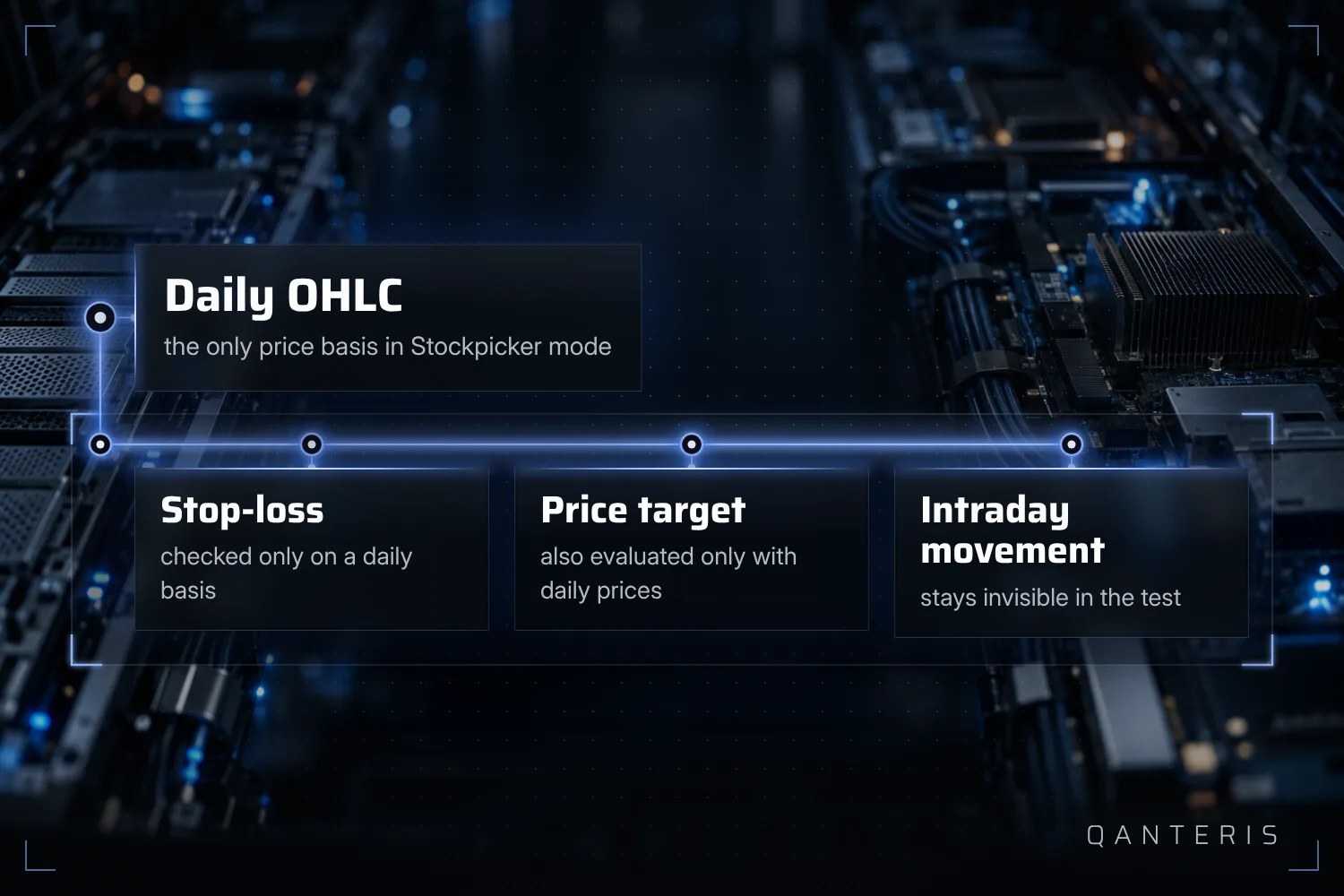
For your strategy this means: stop-loss and price-target rules are evaluated based on daily prices, not on the actual price movement within a day. An exit that fits in the backtest on a daily basis can behave differently in reality, because the exact timing within the day isn't represented in the test. You need to keep that in mind when you design exit rules for stock strategies.
What a backtest like this shows, and what it doesn't
Whether you test a single stock or a whole group: a backtest only ever shows you how a strategy would have behaved in the past on historical data. It doesn't show you how it will behave in the future.
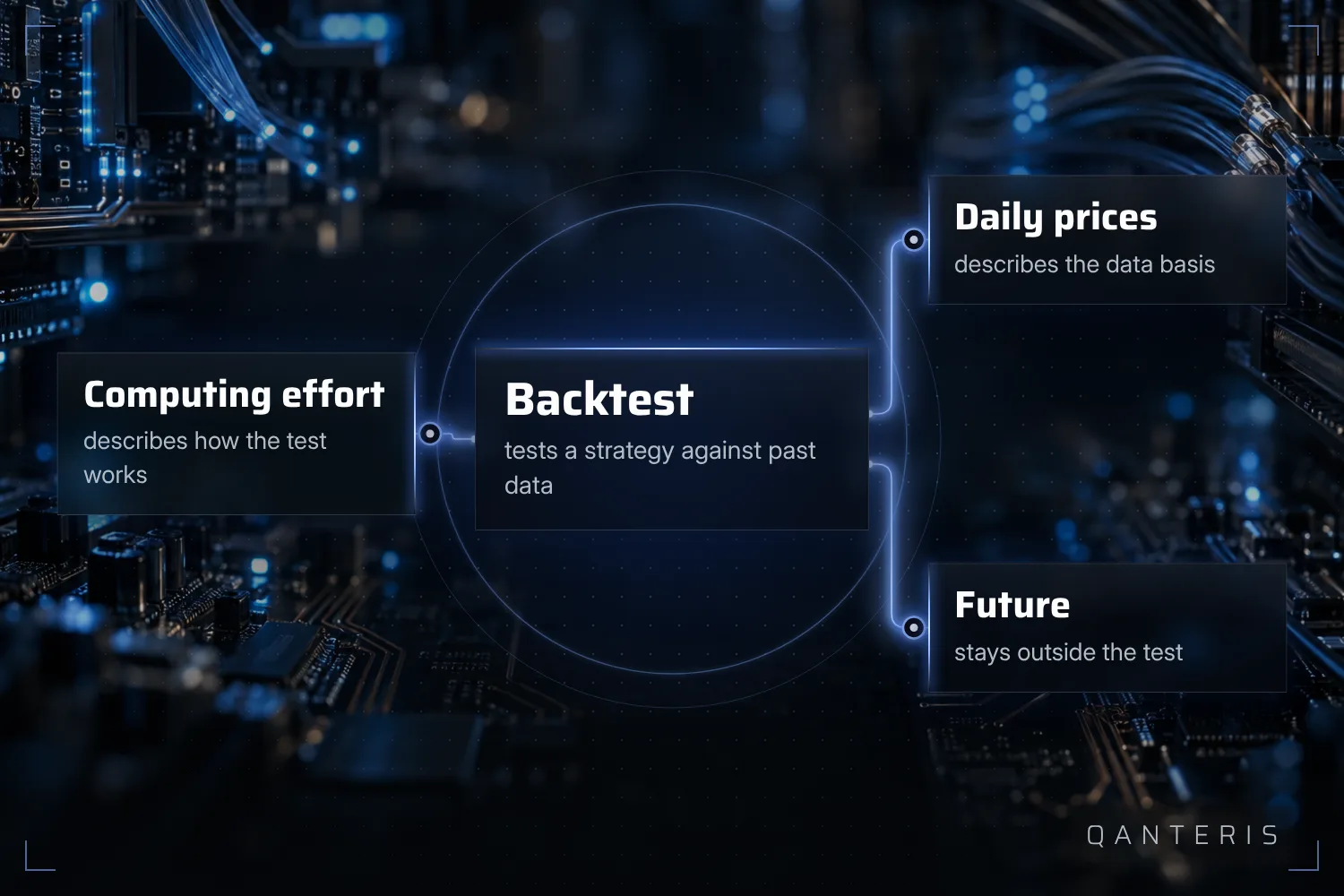
That applies to the computing effort of the Stockpicker engine just as much as to the restriction to daily prices: both points describe how the test works, not what it says about future results. Knowing the characteristics of stock backtests lets you put the results into a more realistic perspective. But that says nothing about future results.
This article is for education only and is not investment advice. Past results, including backtests, do not guarantee future results. Trading financial instruments involves risk, and you can lose money.
This article is for education only and is not investment advice. Past results do not guarantee future results.
How do you do it? Share it in the community. Free, in your language.
Sign up free