Algo trading: How strategies are built and tested

Do you need to know how to code to get into algo trading? And what actually makes a strategy robust before it runs on automation? This article answers both, with evidence at two points: how a strategy comes to be, and how it gets tested. You'll get two documented ways to build a trading strategy, the order in which robustness checks make sense, and an explanation of how a Monte Carlo analysis works and where its conclusions stop being useful.
Two ways to build a trading strategy
In practice, two approaches stand out. One is classic strategy building: you build a strategy from scratch, without data mining methods, usually starting from your own market idea or a known pattern. The other is data mining: a large number of rules get tested automatically, and the strategy with the best observed historical result is what survives at the end. Both paths lead to a rule based strategy, but they differ in how the rules come about.
A strong historical result from a data mining run shows how a rule behaved in the past. It says nothing about how it will behave going forward, and it's not proof that this rule is objectively the best one.

What a study of many tested FX strategies shows
Filtering the useful strategies out of a large pool of tested ones is a question of its own. A documented article series on this is based on a study from 2019 and 2020 that looked at feature selection methodology across a large number of tested FX strategies.
The results of that study apply to the strategies and markets checked at the time. They don't automatically carry over to other markets or timeframes, and they say nothing about whether a single strategy will perform similarly in the future to how it did in the test. What the study offers is a method for extracting, from many tested rules, the features that help with selection.
Why robustness testing only starts after optimization
Two documented methods for robustness testing, the Optimization Profile and the System Parameter Permutation, both assume that a strategy's parameters have already been optimized. Only once optimization has produced a series of optimization runs can one of these methods be applied to that result.
That also means these methods don't replace optimization, they build on it. And passing these checks is not proof that a strategy will perform similarly in a real, live market.

How the Monte Carlo analysis works
The Monte Carlo analysis repeats the same simulation many times, with a small random change made on each run. According to the documentation, a higher number of these repetitions increases the statistical power, meaning the reliability, of the result.
There's a limit here too: the method works with historical or simulated data. It says nothing about future market moves, and more repetitions won't turn a weak strategy into a good one.
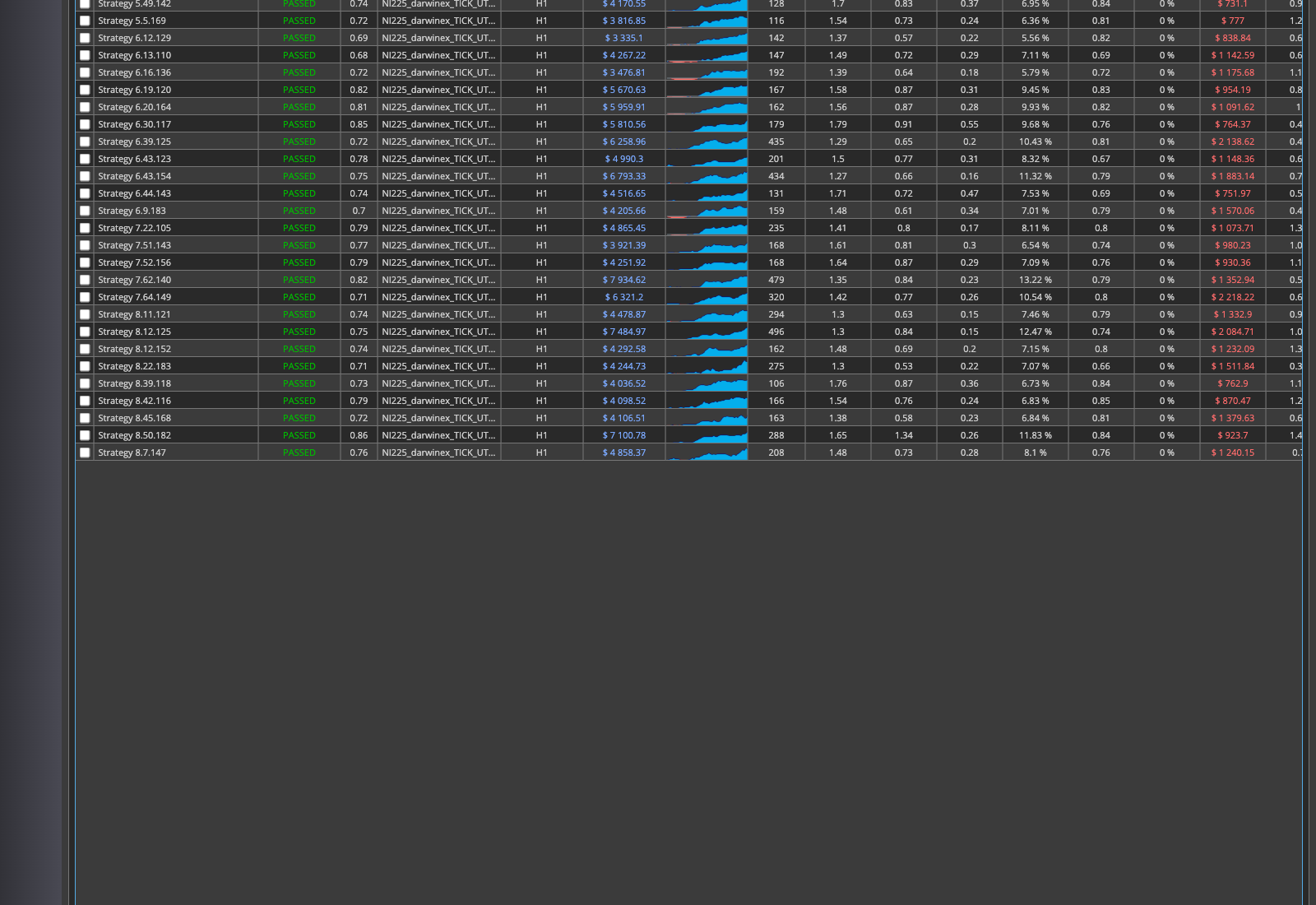
What these checks show, and what they don't
Both the Optimization Profile check and the Monte Carlo analysis describe how a strategy behaved on historical or simulated data. The documentation frames them as indicators of how reliable that past data is, not as a promise of how the strategy will perform in a real, future market.
This limit shapes the whole method. When you build a strategy, you test it against the past because there's no other data source available. What the check shows is how stable the result stays under small changes. It says nothing about what happens next in the market.
What the method can tell you, and what it can't
Algo trading, as described here, consists of rules, testing them against past data, and running them automatically. Data mining for rule discovery, the Optimization Profile check, the System Parameter Permutation and the Monte Carlo analysis all show how stable a strategy was under variations in data and parameters. They don't show how that strategy will behave in a market that hasn't happened yet.
If you work with these tools, keep that limit in mind every time you run a new check. A robustness check that passes is a hint, not proof.
This article is for education only and is not investment advice. Past results, including backtests, do not guarantee future results. Trading financial instruments involves risk, and you can lose money.
This article is for education only and is not investment advice. Past results do not guarantee future results.
How do you do it? Share it in the community. Free, in your language.
Sign up free